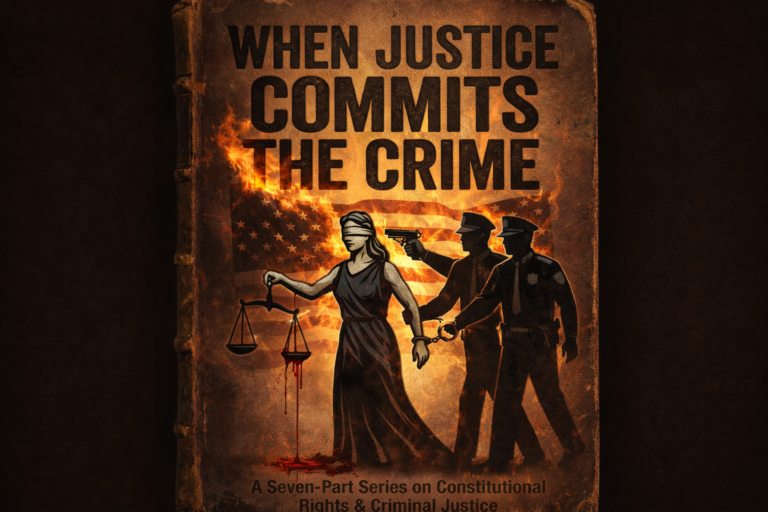
WHEN JUSTICE COMMITS CRIME: PART 7
The Dog, the Leash, and the Fiction of Probable Cause
Modern policing leans heavily on ritual. Few rituals are as powerful—or as poorly examined—as the open-air K-9 sniff. To courts, it’s treated like a neutral instrument. To citizens, it feels like a magic trick: suspicion goes in, certainty comes out, and no one is allowed to ask how the trick works.
But when you slow the moment down, the mechanics matter.
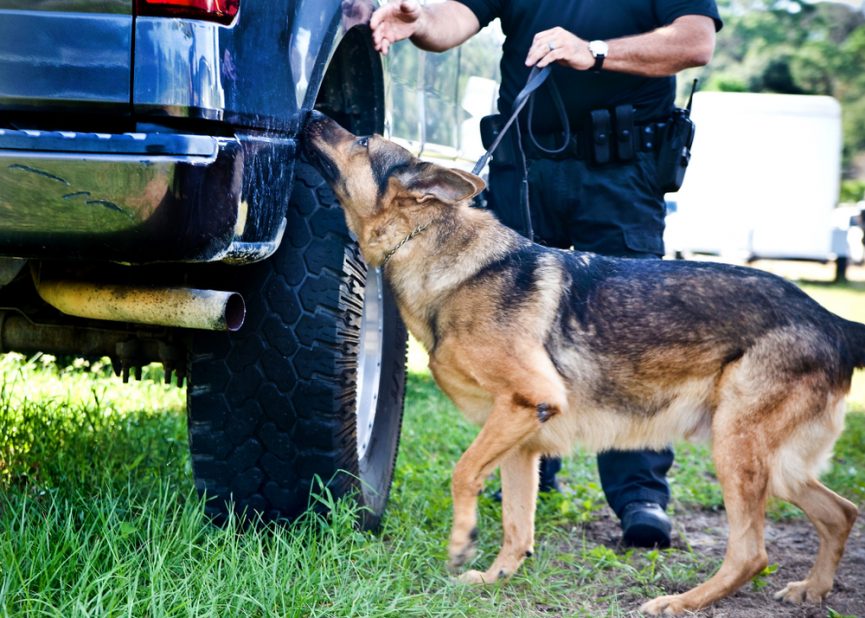
A narcotics dog cannot testify. It cannot explain what it smelled, when it smelled it, or why it changed its behavior. All of that meaning is supplied by the handler. That alone should demand caution. Instead, we’ve built a system where an animal’s excitement—filtered through human interpretation—can unlock a warrantless search.
This is where justice quietly slips into misconduct.
K-9s are trained by reward. The toy is not incidental; it is the paycheck. When a handler carries a ball, tug, or reward object during a sniff, the test is no longer clean. Anticipation competes with detection. Play behavior can look like an alert. Excitement can be narrated as certainty. The Constitution is then asked to accept that narration as fact.
That is not evidence. It is interpretation wearing a badge.
The reform here is not radical. It’s obvious. During an open-air sniff, the handler should have nothing in their hands but a leash. No toys. No reward cues. No accidental signaling. If an animal’s behavior is going to justify an intrusion, the state has a duty to remove avoidable influence. Chain-of-custody rules exist for inanimate evidence; living evidence deserves no less discipline.
Transparency matters too. Before a sniff begins, the driver should be told—plainly—what specific behaviors constitute an alert. Sit. Freeze. Stare. Scratch. Whatever the department claims is a “final response.” That disclosure does two things the system currently resists: it makes the alert observable, and it limits post-hoc storytelling. If the rules are explained beforehand, the narrative afterward has to match them.
This matters even more in a post-marijuana world.
When Colorado and Michigan legalized cannabis, K-9 units weren’t quietly retired. Dogs trained to alert on marijuana were reassigned, retrained, or simply kept in service while policy shifted around them. But dogs do not unlearn odors. You cannot ask a narcotics dog to forget cannabis. At best, you suppress a response; you don’t erase recognition.
That creates constitutional ambiguity. If a dog alerts and marijuana may be lawful, the alert no longer identifies criminal activity with any specificity. The nose may be accurate. The law simply no longer cares about what it detected.
Courts try to paper over this with phrases like “totality of the circumstances,” but the logic problem remains. Probable cause requires a fair probability of a crime—not a fair probability that something once illegal might be present.
Now layer in federal reality. Despite political noise, marijuana has not been rescheduled by fiat. The Drug Enforcement Administration is still in formal rulemaking following HHS recommendations. Even so, the direction is unmistakable: the government itself now acknowledges accepted medical use. That acknowledgment breaks the old drug-dog logic.
If a driver says, “I have marijuana, and it’s prescribed,” that is not an admission of a crime. It is an assertion of lawful possession. Saying “I have Adderall” doesn’t authorize a search. Saying “I have a firearm” doesn’t either. Once legality is plausible, odor and admission lose their power. Ambiguity is not probable cause.
This is the central contradiction Part 7 exposes.
K-9 units were built for a drug-war world where marijuana was always contraband. The law no longer lives there. The dogs still do. And rather than recalibrate, the system leans harder on deference—asking courts and citizens to trust what they cannot see, challenge, or meaningfully verify.
The dog isn’t the villain. The leash holder isn’t even always acting in bad faith. The problem is structural. We’ve allowed a shortcut to become doctrine. We’ve let excitement masquerade as evidence. We’ve permitted unverifiable moments to carry constitutional weight.
Justice doesn’t have to commit crimes loudly. Sometimes it does it softly—through habit, ritual, and a wagging tail—while insisting that no one look too closely at how the trick is performed.
A leash only. Clear disclosures. Corroboration before intrusion.
Those aren’t anti-police demands. They are the bare minimum a constitutional system owes its citizens when it hands probable cause to an animal and calls it proof.