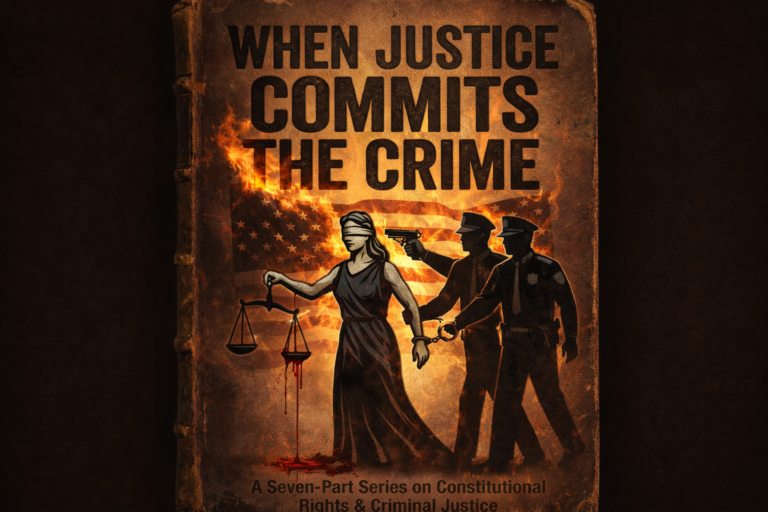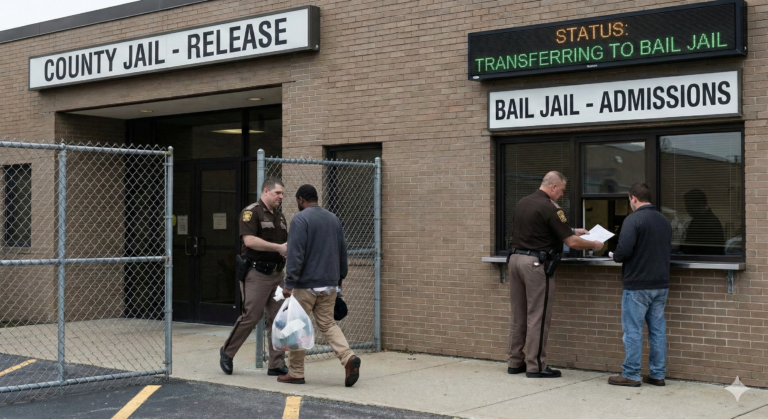
WHEN JUSTICE COMMITS CRIME: PART 4
MEETING YOUR COUNSEL: DEFENSE AFTER DEPLETION
By the time most defendants meaningfully “meet their lawyer” in Indiana’s criminal justice system, the case has already been shaped by forces far beyond the merits of the charge.
Money has been spent.
Liberty has been restricted.
Leverage has been applied.
What remains is not the open field of defense promised by the Constitution, but a narrowed corridor defined by depletion.
This installment examines what happens at the moment defense representation actually begins—and how, in most cases, that moment arrives only after the system has already done its work.
From Choice to Assignment
The Sixth Amendment guarantees the right to counsel. In theory, it also protects a defendant’s ability to choose that counsel, within practical limits (United States v. Gonzalez-Lopez, 548 U.S. 140 (2006)). In practice, that choice depends almost entirely on resources.
Indiana’s pretrial system ensures those resources are often gone before representation truly begins.
Bond payments, continued incarceration, supervision fees, lost employment, and basic survival costs consume the funds that might otherwise be used to retain private counsel. As a result, nine times out of ten, defendants do not meet chosen counsel. They meet appointed counsel—not because of a constitutional failure on paper, but because the system has made any other option financially unreachable.
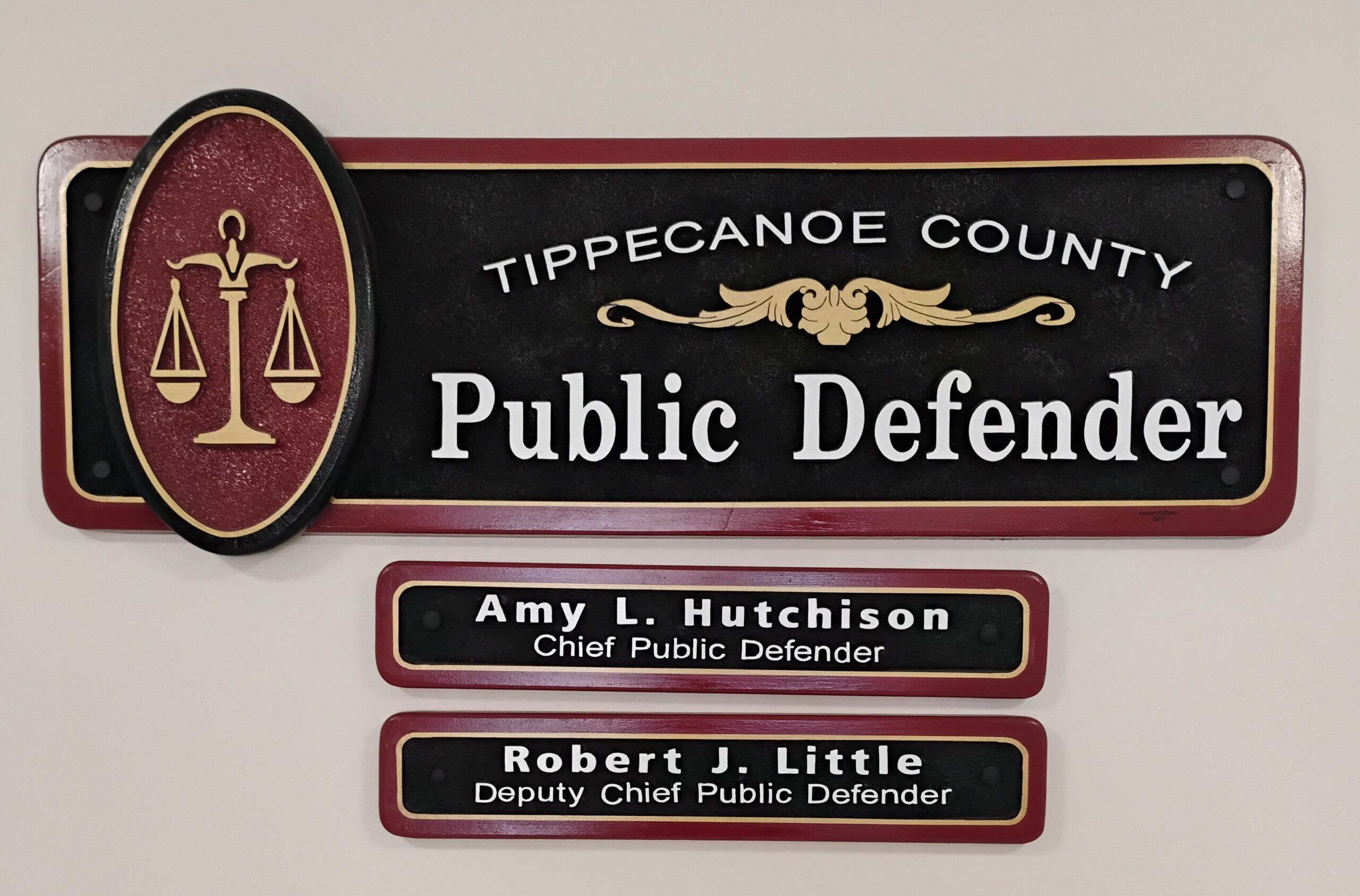
Public defenders and court-appointed attorneys step in not at the beginning of the process, but at the end of a financial attrition cycle.
The First Real Conversation
For many defendants, the first substantive conversation with counsel occurs under immediate pressure:
- the client is already detained or under supervision,
- fees are accruing daily,
- bond revocation remains a constant threat,
- and the case clock is already running.
In this environment, defense does not begin with investigation. It begins with damage control.
Rather than asking “What happened?”, the first question is often “How do we stop this from getting worse?”
That question sets the tone for everything that follows.
Pre-Agreements as the Default Path
Modern criminal courts are not systems of trials. They are systems of negotiated resolution. The United States Supreme Court has openly acknowledged this reality, describing the contemporary criminal justice process as “a system of pleas, not a system of trials” (Missouri v. Frye, 566 U.S. 134 (2012)).
Indiana reflects this national pattern. Well over ninety percent of criminal cases resolve without a jury ever being empaneled. Trials have become rare events. Suppression hearings rarer still.
Within that context, pre-agreements—plea negotiations initiated before meaningful discovery or motion practice—become the default. They are driven not by evidentiary strength, but by time, cost, and pressure.
For a defendant paying daily supervision fees or sitting in jail, delay itself becomes punishment. Resolution, even unfavorable resolution, offers relief.
The system does not need to force pleas. It simply makes resistance expensive.
Motion Practice and the Cost of Disuse
Trial advocacy is a perishable skill. So is motion litigation.
Suppression motions, standing arguments, evidentiary challenges, and constitutional objections require repetition and active use. When cases routinely resolve before these tools are deployed, they fall out of circulation—not because they are unnecessary, but because the system no longer sustains their use.
This atrophy is not theoretical. It is observable.
In a suppression hearing I personally observed, defense counsel failed to recognize or argue the issue of standing—a foundational requirement for Fourth Amendment suppression. As a result, the client was permitted to testify in a manner that eliminated her own standing to challenge the search, effectively destroying the suppression claim before the court ever reached the merits. Counsel did not coach his client before allowing her to testify. She testified herself out of standing to bring suppression.
Standing is not an obscure doctrine. Without it, a defendant cannot contest the legality of a search, regardless of how unconstitutional the conduct may have been (Rakas v. Illinois, 439 U.S. 128 (1978)). Once forfeited, suppression is no longer legally available.
The hearing did not fail because the law was unsettled. It failed because the issue was not identified, preserved, or litigated.
That moment illustrates the cost of disuse.
Atrophy Without Villains
This is not an indictment of individual attorneys.
Public defenders and court-appointed counsel operate under extreme caseload pressure. Prosecutors are incentivized toward efficient resolution. Judges manage crowded dockets. Within this structure, trials are not discouraged explicitly; they are structurally avoided.
When fewer than ten percent of cases ever reach a jury, suppression hearings and contested motions become uncommon events. When those events are uncommon, fluency declines. Foundational arguments go unraised. Courts are never asked to rule. The law stagnates.
Over time, the courtroom shifts from a forum of challenge to a venue of confirmation—processing outcomes rather than testing power.
Atrophy does not announce itself.
It accumulates quietly—one waived motion, one unfiled challenge, one unexamined search at a time.
Defense After Depletion
By the time counsel is fully engaged, the range of viable outcomes has already narrowed.
Funds that could have supported investigation or expert review have been spent on incarceration and supervision. Time that could have been used for motion practice has been consumed by compliance. Leverage now belongs almost entirely to the state.
The question is no longer “Can the case be challenged?”
It becomes “How do we resolve this with the least additional harm?”
The right to counsel remains intact in form.
Its substance, however, has been reshaped by everything that came before.
Where This Leaves the Series
Part I showed where power enters the system.
Part II explained why it is insulated from correction.
Part III demonstrated how bail and risk punish before guilt.
Part IV shows how defense itself is weakened before it can fully function.
Cases do not resolve because the truth was tested.
They resolve because resistance became too costly.
Part V will examine the a possible conflict of interest.